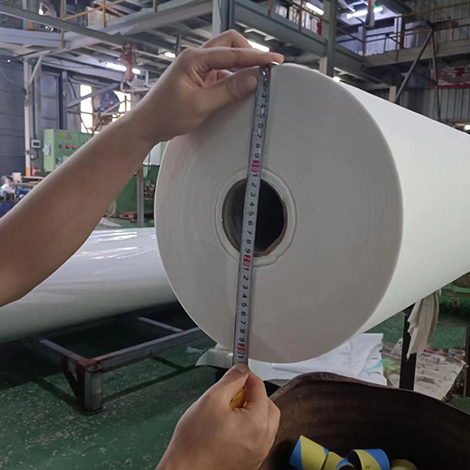

Du fabricant de rouleaux non tissés à l'industrie du meuble
Lorsque vous vous asseyez sur un canapé ou un fauteuil confortable, vous voyez le revêtement en cuir ou en tissu. Vous sentez le coussin en mousse. Ce que vous ne le faites pas La vue est tout aussi importante.
Sous cette belle apparence se cache une véritable bête de somme : tissu non tissé spunbond en polypropylène.
Des housses de ressorts aux barrières anti-poussière, voici pourquoi les fabricants de meubles du monde entier font confiance au spunbond pour leurs canapés, chaises et matelas.
À l'intérieur de chaque canapé rembourré, ce sont des ressorts métalliques qui supportent l'essentiel du poids. Mais les ressorts nus peuvent :
Le non-tissé spunbond agit comme un couche de séparation Entre les ressorts et la mousse, il est suffisamment résistant pour ne pas se perforer, tout en étant assez fin pour ne pas prendre de place supplémentaire.
Résultat: Des meubles plus silencieux et plus durables.
Retournez n'importe quel canapé ou fauteuil de qualité. De quoi est faite la base ? Traditionnellement, les fabricants utilisaient du cambric tissé (tissu noir). Aujourd'hui, de plus en plus de fabricants optent pour d'autres matériaux. non-tissé spunbond.
Pourquoi?
Pour les housses anti-poussière de couleur foncée, nous fournissons spunbond noir Avec un grammage de 60 à 100 g/m², ce produit est résistant, d'aspect professionnel et invisible pour le client final.
Pour les meubles muraux, les armoires et les bibliothèques, le panneau arrière est souvent dissimulé. Certains fabricants utilisent du bois massif ou du MDF, mais cela augmente le poids et le coût.
Une alternative légère ? non-tissé spunbond agrafé ou collé au cadre arrière.
Avantages:
C'est particulièrement populaire pour les meubles en kit (RTA).
Lorsqu'on découpe des coussins en mousse, ils libèrent de petites particules (poussière). Envelopper la mousse dans du spunbond avant de poser le revêtement :
Pour cette application, nous recommandons Spunbond blanc ou noir de 50 à 80 g/m².
Certains meubles présentent des cavités cachées (par exemple, des accoudoirs creux). Au lieu de les laisser vides (ce qui donne une impression de fragilité et de creux lorsqu'on les tapote), les fabricants les remplissent de chutes de mousse ou de coton, puis les recouvrent de non-tissé spunbond.
Cela crée :
Dans la fabrication de canapés haut de gamme, de fins fils métalliques sont disposés parallèlement aux ressorts. Le non-tissé spunbond est parfois utilisé comme… isolateur secondaire Entre les ressorts et la couche de tissu, elle absorbe les mouvements des ressorts et répartit la charge uniformément.
| Application | Poids recommandé (GSM) | Couleur courante | Avantage clé |
|---|---|---|---|
| Couverture de ressort | 60–90 | Noir/Blanc | Réduction du bruit |
| Cache-poussière | 80–120 | Noir | Bloque la poussière, respirant |
| enveloppe en mousse | 40–60 | Blanc | confinement des poussières |
| Panneau arrière | 70–100 | Noir | Léger et respirant |
| Revêtement d'accoudoir | 50–80 | Blanc | Sensation de solidité, finition lisse |
| Fonctionnalité | Tissu tissé | Non-tissé spunbond |
|---|---|---|
| Coût | Plus haut | Inférieur |
| Résistance à la déchirure | Directionnel | Uniforme |
| Peluches/effilochage | Les bords s'effilochent | coupe nette |
| respirabilité | Bien | Excellent |
| Obstruction à la poussière | Modéré | Excellent |
| Recyclage | PP tissé recyclable | PP spunbond recyclable |
Vous ne verrez pas de non-tissé spunbond dans un showroom de meubles. Vos clients ne s'en apercevront même pas. Mais vous, le fabricant, vous le remarquerez. coûts réduits, assemblage plus rapide et meilleur contrôle de la qualité.
Des protections de ressorts aux barrières anti-poussière, le polypropylène spunbond est l'amélioration invisible qui rend les bons meubles encore meilleurs.
Vous recherchez un fournisseur fiable de non-tissé spunbond pour votre production de meubles ? Nous proposons des largeurs personnalisées, des couleurs (notamment noir et blanc) et des grammages allant de 40 g/m² à 150 g/m².
Contactez-nous pour obtenir des échantillons ou un devis Vos meubles vous remercieront, discrètement, de l'intérieur.

Soclal sharing


E-mail : marketing@henghuanonwoven.com
Ajouter : No.260 Liqi Road Hangcheng Street, Changle District, Fuzhou City, Fujian Province, China
Droit d'auteur
@ 2026 Fuzhou Heng Hua nouveau matériel Co., Ltd. Tous droits réservés
.  RÉSEAU PRIS EN CHARGE
laisser un message
Numériser vers Wechat :

Numériser vers WhatsApp :