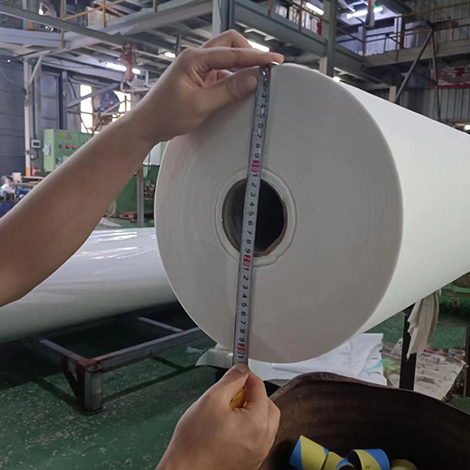

Dans le domaine des matériaux modernes, le tissu non tissé spunbond en polypropylène (PP) est devenu un matériau de base indispensable pour l'emballage industriel, le secteur médical et paramédical, ainsi que la protection agricole, grâce à ses propriétés physiques stables et à sa grande polyvalence. Ce matériau est obtenu directement par filage en une maille, éliminant ainsi l'étape traditionnelle d'entrelacement des fils de tissage. Tout en conservant une résistance élevée, il offre également une bonne respirabilité et une grande uniformité.
Du point de vue de la classification des matériaux, le tissu non tissé spunbond en polypropylène (PP) présente des caractéristiques de résistance aux acides et aux alcalis ainsi qu'une bonne résistance au vieillissement. Il est couramment utilisé dans la fabrication de sacs écologiques, comme base pour les matériaux d'étanchéité enroulés dans le bâtiment et comme couche protectrice pour les canapés. Sa légèreté permet de réduire les coûts de transport et il est facilement recyclable et réutilisable, ce qui s'inscrit dans la tendance actuelle de la production durable. Le tissu non tissé spunbond en polyester, quant à lui, excelle en matière de résistance aux hautes températures et de stabilité dimensionnelle, ce qui le rend idéal comme matériau filtrant, gaine de câbles ou couche de support pour les intérieurs automobiles.
En pratique, le choix des matériaux en polypropylène non tissé doit être déterminé en fonction des besoins spécifiques. Par exemple, les équipements de protection médicale doivent impérativement offrir une barrière antibactérienne efficace, tandis que les bâches agricoles privilégient l'équilibre entre perméabilité à l'humidité et résistance aux UV. En ajustant la finesse des fibres, la température de laminage à chaud et la forme des points de laminage, les fabricants peuvent personnaliser des produits aux grammages, épaisseurs et textures de surface variés, répondant ainsi à des besoins divers, des consommables jetables aux pièces à usage prolongé.
Grâce aux progrès technologiques, la consommation d'énergie liée à la production de non-tissés spunbond en PP a progressivement diminué, et de nouvelles catégories de produits fonctionnels, tels que les matériaux antibactériens, antistatiques et hydrofuges, continuent d'émerger. Ce type de matériau remplace non seulement certains produits plastiques traditionnels, mais trouve également des applications à plus forte valeur ajoutée grâce à l'intégration de la technologie composite avec des tissus meltblown, des films respirants, etc.
Pour l'acheteur, le contrôle d'indicateurs clés tels que l'uniformité, l'allongement à la rupture et l'écart de masse surfacique des matériaux en polypropylène non tissé contribue à garantir la stabilité de la qualité du produit fini. En optimisant des paramètres comme la température de filage, les conditions de refroidissement et la vitesse de pose du maillage, les entreprises de production peuvent maintenir la constance des performances de leurs produits tout en augmentant leur capacité de production.
Du point de vue de la chaîne industrielle, le développement du tissu non tissé spunbond en polypropylène (PP) en tant que matériau industriel de base a toujours été étroitement lié aux orientations des politiques environnementales et à la valorisation des produits de consommation finale. L'investissement continu dans la recherche et le développement de matériaux biodégradables, ainsi que l'augmentation de la part de matériaux recyclés incorporés, constituent un axe majeur de progrès pour l'industrie.

Soclal sharing


E-mail : marketing@henghuanonwoven.com
Ajouter : No.260 Liqi Road Hangcheng Street, Changle District, Fuzhou City, Fujian Province, China
Droit d'auteur
@ 2026 Fuzhou Heng Hua nouveau matériel Co., Ltd. Tous droits réservés
.  RÉSEAU PRIS EN CHARGE
laisser un message
Numériser vers Wechat :

Numériser vers WhatsApp :