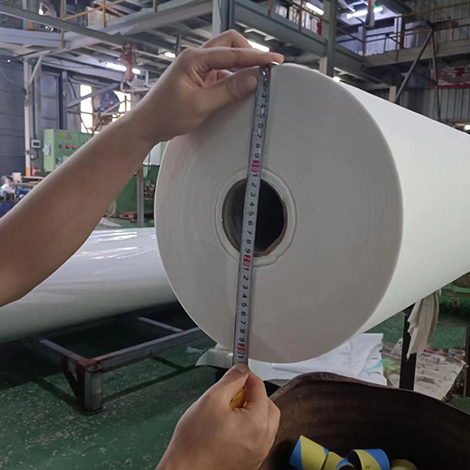

Du fabricant de rouleaux non tissés à vous
Le tissu en polypropylène (PP) est omniprésent. Des blouses médicales aux sacs de courses, en passant par les revêtements de meubles et les bâches agricoles, c'est l'un des matériaux les plus polyvalents de l'industrie manufacturière moderne.
Mais comme tout matériau, le tissu PP a forces et faiblessesComprendre les deux est essentiel pour choisir le tissu adapté à votre application.
Examinons honnêtement et de manière équilibrée les avantages et les inconvénients du tissu en polypropylène.
Le tissu en polypropylène est un textile synthétique fabriqué à partir de résine de polypropylène, un polymère thermoplastique dérivé du pétrole. Il peut être produit sous forme de :
Dans cet article, nous nous concentrons principalement sur PP non tissé spunbond, la forme la plus polyvalente et la plus répandue.
1. Léger
Le tissu PP est extrêmement léger. À résistance comparable, son poids est de 30 à 40 % de moins que les alternatives tissées. Cela se traduit par des coûts d'expédition réduits, une manutention plus facile et moins de gaspillage de matériaux.
2. Durable et résistant aux déchirures
Le PP spunbond a résistance à la déchirure uniforme dans toutes les directions — contrairement aux tissus tissés qui se déchirent facilement dans le sens du tissage. La structure à filaments continus résiste à la perforation et à l'abrasion.
3. Résistance chimique
PP est très résistant à la plupart des acides, bases et solvantsIl ne se dégrade pas au contact de produits chimiques courants, ce qui le rend idéal pour les applications industrielles, agricoles et médicales.
4. Respirant et protecteur
Le tissu spunbond permet l'air et la vapeur d'eau pour passer à travers Tout en bloquant les liquides et les poussières fines, cette combinaison unique la rend idéale pour les blouses médicales, les composants de couches et les bâches agricoles.
5. Rentable
Le tissu PP est nettement moins cher par rapport à des alternatives comme le coton, le polyester ou les laminés. La production à grande vitesse (jusqu'à 600 m/min) permet de maintenir des coûts bas.
6. Excellente qualité d'impression
Le non-tissé spunbond possède un surface lisse, semblable à du papier qui accepte l'impression flexographique et héliogravure de haute qualité. Logos nets, couleurs éclatantes et codes-barres scannables sont faciles à obtenir.
7. Non pelucheux
Contrairement au coton ou aux tissus tissés, le polypropylène spunbond possède pas d'effilochage ni de fibres lâchesIl coupe net et reste propre — un atout essentiel pour les applications médicales, les salles blanches et l'emballage alimentaire.
8. Recyclable
PP est 100% recyclable et dispose d'une filière de recyclage bien établie. Elle peut être retraitée pour fabriquer de nouveaux produits, réduisant ainsi l'impact environnemental.
9. Hydrophobe (repoussant l'eau)
PP naturellement repousse l'eauIl n'absorbe pas l'humidité, il reste donc sec, résiste aux moisissures et conserve sa solidité même en milieu humide.
1. Sensibilité aux UV
Voici le Le principal inconvénient est que…Sans stabilisateurs UV, le tissu en polypropylène se dégrade rapidement au soleil, généralement en 2 à 6 mois. Les chaînes polymères se rompent, ce qui entraîne une fragilisation, des fissures et une perte de résistance.
Solution : Les stabilisateurs UV peuvent prolonger la durée de vie en extérieur jusqu'à 1 à 3 ans.
2. Faible résistance à la chaleur
PP commence à ramollir à environ 150 °C (302 °F) Il fond à environ 160–170 °C. Il ne convient pas aux applications à haute température ni aux environnements où il entre en contact avec des surfaces chaudes.
Solution : Utiliser des matériaux alternatifs (par exemple, le polyester) pour les applications à haute température. (Nous privilégions le polypropylène)
3. Mauvaise adhérence sans traitement
Parce que le PP est non polaire, Les adhésifs et les revêtements n'adhèrent pas facilement. sur des surfaces non traitées. Cela peut représenter un défi pour certains procédés de collage ou de stratification.
Solution : Le traitement corona ou le traitement plasma améliorent l'énergie de surface pour une meilleure adhérence.
4. Accumulation de charges statiques
Le PP est un isolant et peut générer de l'électricité statique, surtout par temps sec. Cela peut attirer la poussière, causer une gêne (au niveau des vêtements) ou perturber le fonctionnement des composants électroniques.
Solution : Des additifs antistatiques ou des traitements de surface sont disponibles.
5. Non biodégradable
Alors que PP est recyclableIl n'est pas biodégradable. Enfoui dans les décharges, il persiste pendant des centaines d'années. Cela pose un problème de durabilité pour les produits à usage unique.
Solution : Le PP est largement recyclé ; les programmes en boucle fermée se développent.
6. Peut être endommagé par l'huile et la graisse
Bien que le PP résiste à la plupart des produits chimiques, il gonfle et s'assouplit Au contact de solvants hydrocarbonés, notamment les huiles et les graisses, son utilisation est limitée dans certains secteurs automobiles et industriels.
AspectAvantageDésavantage
| Poids | Léger, réduit les frais de livraison | — |
| Force | résistance uniforme à la déchirure | Se dégrade sous l'effet des UV |
| résistance chimique | Résiste à la plupart des acides et des bases | Endommagé par les huiles et les solvants |
| respirabilité | Excellent | — |
| résistance à la chaleur | Bonne tenue jusqu'à environ 100 °C | Ramollit à 150 °C, fond à 170 °C |
| Imprimabilité | Excellent (spunbond) | Mauvais (PP tissé) |
| Recyclabilité | 100% recyclable | Non biodégradable |
| Coût | Faible coût par rapport aux alternatives | — |
La plupart des inconvénients de PP ont solutions pratiques:
Solution de limitation
| dégradation par les UV | stabilisateurs UV |
| faible résistance à la chaleur | Évitez les applications à haute température ; utilisez le PP uniquement en continu à une température inférieure à 100 °C. |
| Mauvaise adhérence | Traitement Corona, traitement plasmatique ou apprêt |
| Charge statique | Additifs antistatiques (par exemple, monostéarate de glycéryle) |
| sensibilité à l'huile | Éviter tout contact avec les huiles ; utiliser des revêtements si nécessaire. |
Choisissez le tissu PP lorsque :
Évitez le tissu PP lorsque :
Le tissu en polypropylène n'est pas un matériau miracle, mais c'est un pratique, polyvalent et économique solution pour une vaste gamme d'applications.
Ses points forts (léger, solide, résistant aux produits chimiques, respirant, imprimable, non pelucheux) surpassent largement ses points faibles (sensibilité aux UV, limitations thermiques, sensibilité à l'huile) — surtout si vous choisissez la bonne qualité et le bon ensemble d'additifs.
Grâce aux stabilisateurs UV, aux antioxydants et aux traitements de surface, nous pouvons personnaliser le polypropylène spunbond pour qu'il fonctionne dans presque tous les environnements.
Vous recherchez un fournisseur fiable de rouleaux de non-tissé spunbond PP monocouche ? Nous proposons des solutions personnalisables avec des stabilisateurs UV, des traitements antistatiques et d'autres options, toutes adaptées à votre application.
Contactez-nous pour obtenir des échantillons ou un devis – Trouvons le tissu PP adapté à votre produit.

Soclal sharing


E-mail : marketing@henghuanonwoven.com
Ajouter : No.260 Liqi Road Hangcheng Street, Changle District, Fuzhou City, Fujian Province, China
Droit d'auteur
@ 2026 Fuzhou Heng Hua nouveau matériel Co., Ltd. Tous droits réservés
.  RÉSEAU PRIS EN CHARGE
laisser un message
Numériser vers Wechat :

Numériser vers WhatsApp :